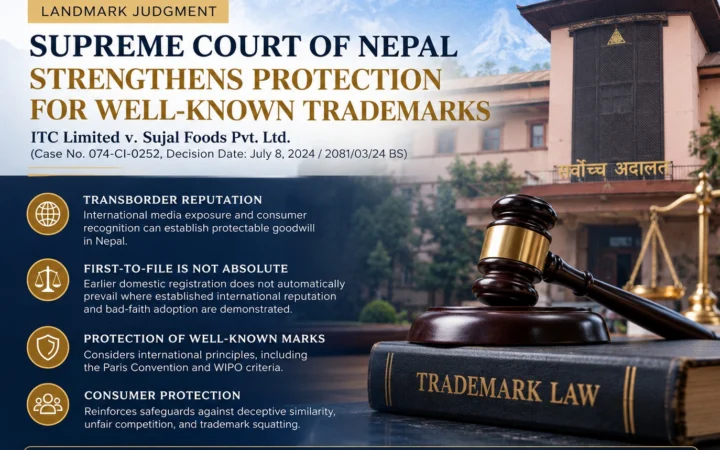
Landmark Legal Analysis: Supreme Court of Nepal Formally Adopts Transborder Reputation and Protects Well-Known Marks
Supreme Court of Nepal Formally Adopts Transborder Reputation and Protects Well-Known Marks

Supreme Court of Nepal Formally Adopts Transborder Reputation and Protects Well-Known Marks
Protect the Look That Makes Your Product Stand Out
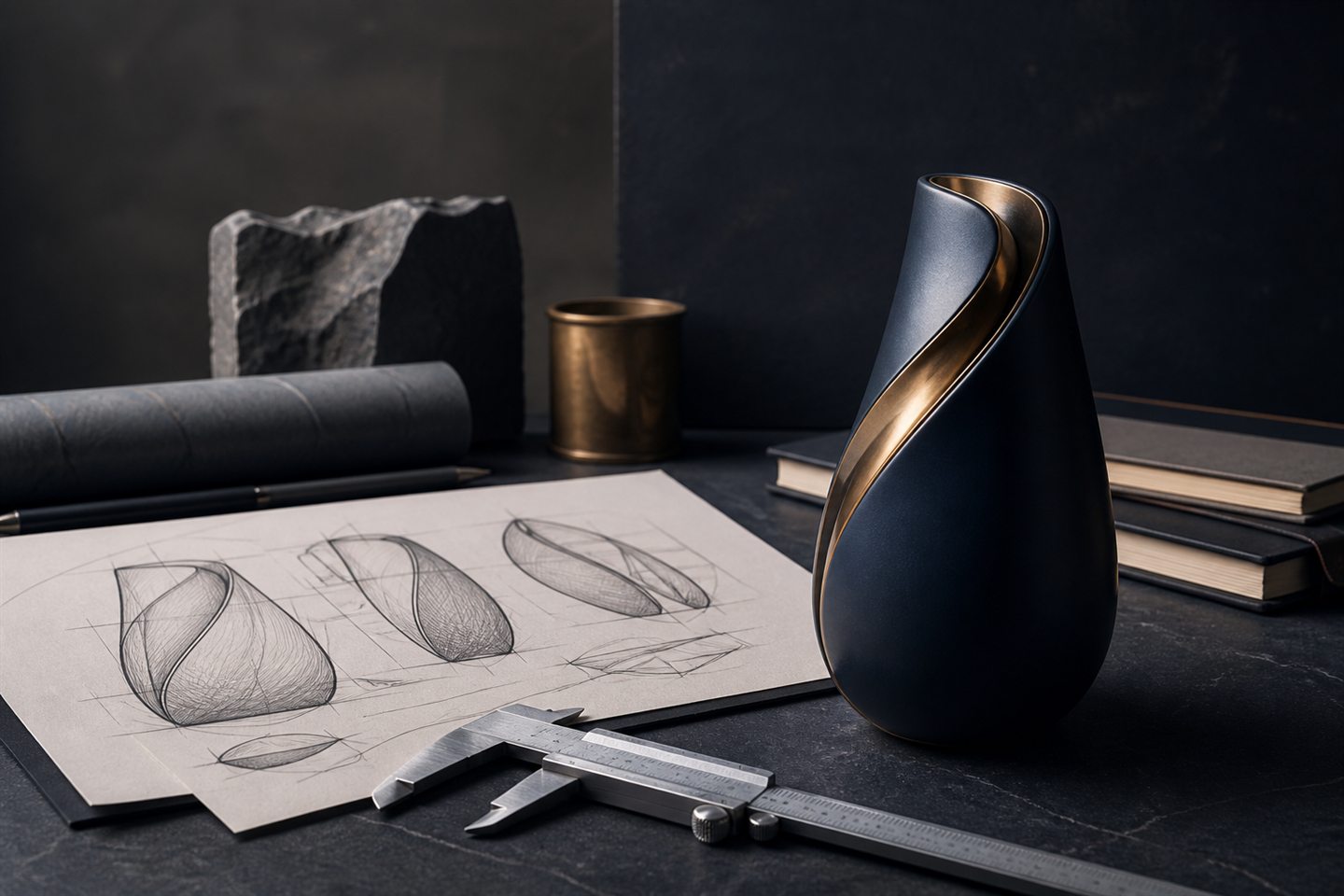
A product’s appearance can be one of its most valuable commercial assets. A distinctive shape, form, pattern or visual identity can set a product apart in the market—and design protection helps ensure that advantage is not simply copied.
Apex Law Chamber advises businesses, manufacturers, designers and brand owners on the registration, protection, enforcement and commercialisation of industrial designs.
From the first assessment of a new design to registration, enforcement, renewal, assignment and licensing, we help clients protect the visual features that make their products distinctive.
Timing matters.
One of the most important steps in protecting a design is filing before the product is publicly disclosed or commercially launched. An early exhibition, catalogue, website, social media post, promotional campaign or retail release may compromise the ability to obtain design protection.
We work with clients at the pre-launch stage to identify protectable designs, assess filing strategy and coordinate applications before disclosure occurs.
Where a design has already entered the public domain, we assess alternative or complementary forms of protection, including trademarks, copyright, passing-off and other available intellectual property rights.
Design registration protects the visual character of a product—the elements customers see and associate with the product itself.
Our advice is focused not only on obtaining registration, but on building protection that supports the client's wider commercial objectives. Depending on the product and business model, design protection may be combined with trademarks, patents, copyright and other intellectual property rights to create a stronger overall protection strategy.
A registered design is more than a certificate—it is a commercial right that can be enforced, transferred and licensed.
We advise clients on suspected copying and unauthorised use and assist with appropriate enforcement measures. Where a design forms part of a broader brand or product strategy, we coordinate design protection with other intellectual property rights to strengthen the client's position against imitation.
We also assist with:
Assignment and Transfer
Structuring and documenting the transfer of design ownership as part of a transaction, restructuring or intellectual property portfolio strategy.
Licensing
Enabling third parties to use protected designs under commercially agreed terms, including royalty and usage arrangements.
Portfolio Management
Maintaining and renewing design rights so valuable protection remains effective throughout the product lifecycle.
A successful product can attract customers—and competitors.
Protecting its distinctive appearance early can help preserve the investment made in its design, development and commercialisation.
At Apex Law Chamber, we provide practical, commercially focused advice on design rights, helping clients secure protection, respond to imitation and turn design assets into valuable business rights.
Protect the design. Preserve the distinction.
Provide product images or drawings, applicant details, ownership information, disclosure dates and any earlier applications. We assess the proposed design and confirm filing, representation and supporting-document requirements before submitting the application.
For patents, designs and trademarks, see the Patent, Design and Trade Mark Act, 1965. We confirm current requirements for your matter.
Five years from registration, renewable for two further terms of five years each, to a maximum of fifteen years.
Seek advice before public disclosure or launch. If disclosure has already occurred, we assess the facts and applicable registration requirements rather than assuming protection is automatically unavailable.
Six months from the first filing in a Paris Convention country.
A fine not exceeding fifty thousand rupees, with the goods connected to the offence confiscated on the order of the Department of Industry.
No. An international design registration does not extend to Nepal, so a national application is required.